

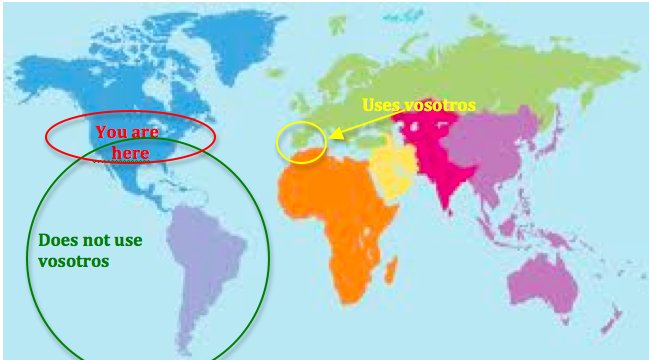
In Spain and some Latin American countries, “vosotros” is a unique pronoun often used in informal settings. But what countries use vosotros beyond these regions? In addition to Spain, countries like Argentina, Uruguay, and parts of Central America embrace this distinctive form of address. Understanding where to use vosotros can enhance your language skills and cultural awareness. Let’s delve deeper into the significance of “vosotros” in different Spanish-speaking territories and unlock the nuances of its usage.

Exploring What Countries Use Vosotros
Welcome, language enthusiasts! Today, we are diving into the fascinating world of Spanish language variations. One interesting aspect of the Spanish language is the use of the pronoun “vosotros.” In this blog post, we will explore what countries use vosotros and how it differs from other Spanish-speaking regions. So, grab your virtual passport, and let’s embark on this linguistic journey!
The Rich Diversity of Spanish-Speaking Countries
Before we delve into the specifics of where vosotros is used, let’s take a moment to appreciate the diverse array of countries where Spanish is spoken. Spanish is the official language in 21 countries, spread across Europe, the Americas, Africa, and the Asia-Pacific region. Each of these countries has its own unique dialects, accents, and linguistic quirks, making Spanish a vibrant and ever-evolving language.
Understanding Vosotros in Spanish
For those of you who may not be familiar with the term, “vosotros” is the second person plural pronoun in Spanish. It is used to address a group of people informally, similar to the English “you all” or “y’all.” While this pronoun is common in Spain, its usage varies in other Spanish-speaking countries.
Spain: The Heart of Vosotros Usage
When discussing the countries where vosotros is predominantly used, we must begin with Spain. As the birthplace of the Spanish language, Spain embraces the use of vosotros in everyday conversations. If you ever find yourself strolling through the streets of Madrid or Barcelona, you will undoubtedly hear this pronoun being used in a variety of contexts.
From casual gatherings with friends to formal meetings, vosotros is an integral part of Spanish communication in Spain. So, if you’re planning a trip to this beautiful country, make sure to familiarize yourself with the nuances of using vosotros to truly immerse yourself in the local culture.
Spain’s Influence on Vosotros in Latin America
While Spain is the primary country where vosotros is in regular use, its influence extends to certain regions in Latin America. Countries with a historical connection to Spain, such as Mexico, Colombia, and Venezuela, may occasionally use vosotros, particularly in formal settings or when addressing larger groups.
However, it’s essential to note that the use of vosotros in Latin America is not as widespread or ingrained as in Spain. Many Latin American countries have adapted their own pronouns and speech patterns, reflecting their unique cultural identities and linguistic evolution.
Vosotros Alternatives in Latin America
In Latin American countries where vosotros is not commonly used, alternative pronouns fulfill the same grammatical function. For instance, “ustedes” is the standard second person plural pronoun in countries like Argentina, Chile, and Peru. It serves as a formal and informal way to address a group of people, making it a versatile and widely accepted pronoun across Latin America.
By exploring these linguistic variations, we gain a deeper appreciation for the rich tapestry of Spanish language usage across different countries. While vosotros remains a hallmark of Spanish communication in Spain, its absence in other regions highlights the dynamic nature of language and cultural expression.
Embracing Linguistic Diversity
As we conclude our exploration of what countries use vosotros, let’s celebrate the diversity of languages and dialects that shape our global community. Whether you find yourself in the bustling streets of Madrid or the colorful markets of Mexico City, each Spanish-speaking country offers a unique linguistic experience that reflects its history, culture, and people.
So, the next time you hear the familiar cadence of vosotros or ustedes, take a moment to appreciate the beauty of language and the myriad ways it connects us across borders and boundaries. ¡Hasta luego, amigos!
Thank you for joining us on this linguistic journey. We hope you’ve enjoyed learning about the countries where vosotros is used and how it fits into the broader context of Spanish language diversity. Stay curious, keep exploring, and remember that language is a bridge that unites us all!
Why Didn't the Spanish Colonies Unify Like the USA?
Frequently Asked Questions
Which countries use vosotros in their language?
In the Spanish language, the use of “vosotros” as a plural form of “you” is primarily found in Spain and some regions in Latin America such as parts of Guatemala, Honduras, El Salvador, and Colombia.
Is vosotros commonly used in Spanish-speaking countries other than Spain?
Although vosotros is mainly used in Spain, it is also spoken in certain regions of Latin America. In countries like Guatemala, Honduras, El Salvador, and Colombia, you may encounter vosotros being used as a familiar form of addressing a group of people.
Why is vosotros not widely used in some Spanish-speaking countries?
In many Spanish-speaking countries outside of Spain, the use of vosotros is not as common due to the preference for using alternative plural forms like ustedes. These countries have adopted ustedes as the standard plural form of “you” in both formal and informal contexts, replacing the use of vosotros.
Final Thoughts
In conclusion, the use of “vosotros” is primarily found in Spain and some Latin American countries. However, its usage varies within these regions, with some countries opting for alternative forms of addressing the second person plural. Despite its declining usage in certain regions, “vosotros” remains a distinctive feature of the Spanish language. Its presence indicates a strong cultural and linguistic tie to the countries that use it. Overall, understanding where and how “vosotros” is used is crucial for mastering the nuances of Spanish language and communication.


