

A crucial component of a vehicle’s drivetrain system, a front differential plays a vital role in distributing power from the engine to the front wheels. What is a front differential, you ask? Simply put, it allows the front wheels to turn at different speeds while maintaining traction. This differential is essential for cornering and handling, ensuring smooth maneuverability on various road conditions. Understanding how the front differential operates is key to appreciating its significance in driving dynamics. Let’s delve deeper into the mechanics behind this fundamental automotive part.

What is a Front Differential: Understanding the Basics
Have you ever wondered how a car or a truck manages to turn smoothly without the tires skidding on the road? The secret lies in a vital component called the front differential. In this article, we will explore what a front differential is, how it works, and why it is essential for your vehicle’s performance.
The Role of a Front Differential
Let’s start with the basics. The front differential is a part of a vehicle’s drivetrain system. Its primary function is to distribute power from the engine to the front wheels while allowing them to rotate at different speeds during turns. This is crucial because the wheels on the same axle need to rotate at different speeds when turning, and the front differential makes this possible.
Understanding How a Front Differential Works
Imagine you are driving your car around a sharp corner. As you turn the steering wheel, the inside wheel travels a shorter distance than the outside wheel. If both wheels were connected directly to the engine without a front differential, the wheels would be forced to turn at the same speed, leading to skidding and loss of control.
Here’s where the front differential comes into play. It allows the inside and outside wheels to rotate at different speeds by using a set of gears. These gears transfer power from the driveshaft to the wheels while allowing them to spin independently of each other. This is what enables your vehicle to make smooth turns without losing traction.
Components of a Front Differential
A front differential is made up of several key components that work together to ensure smooth operation. These components include:
Gears
The gears inside the front differential are responsible for transferring power from the driveshaft to the wheels. They are designed to mesh together smoothly and efficiently to allow for varying wheel speeds during turns.
Ring and Pinion
The ring and pinion gear set is a crucial part of the front differential. The ring gear is mounted on the differential case, while the pinion gear is connected to the driveshaft. When the driveshaft rotates, it turns the pinion gear, which in turn rotates the ring gear, transferring power to the wheels.
Axle Shafts
Axle shafts connect the front differential to the wheels. They transmit power from the differential to the wheels, allowing the vehicle to move forward. The axle shafts also ensure that power is evenly distributed to both wheels for better traction.
Importance of Front Differential in Four-Wheel Drive Vehicles
While all vehicles have differentials, they are especially important in four-wheel drive (4WD) and all-wheel drive (AWD) vehicles. In these vehicles, the front differential works in conjunction with the rear differential to ensure that power is distributed evenly to all four wheels.
For off-road enthusiasts and drivers in challenging terrain, having a functioning front differential is crucial for maintaining traction and stability. It allows the vehicle to navigate rough terrain, steep inclines, and slippery surfaces with ease, ensuring a safe and enjoyable driving experience.
Signs of Front Differential Problems
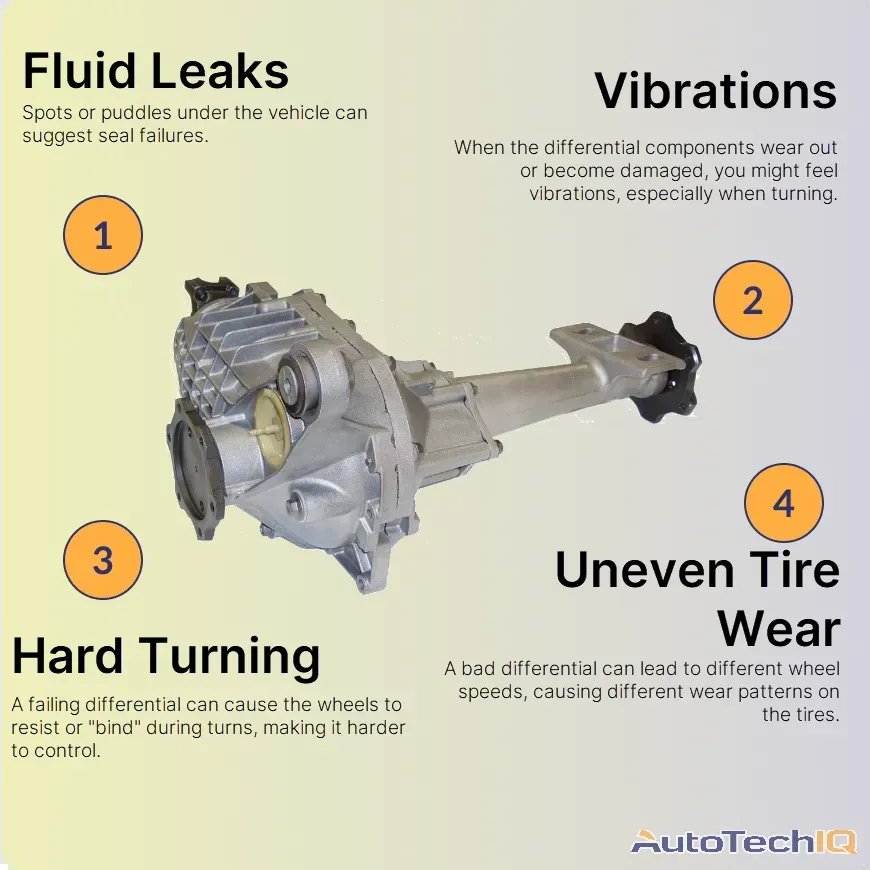
Like any mechanical component, front differentials can experience issues over time. Some common signs of front differential problems include:
Whining or Grinding Noises
If you hear strange noises coming from the front of your vehicle, such as whining or grinding sounds, it could indicate a problem with the front differential gears. These noises may be more pronounced during turns or acceleration.
Difficulty Turning
A malfunctioning front differential can make it challenging to turn your vehicle smoothly. If you notice increased resistance or stiffness when turning the steering wheel, there may be an issue with the front differential.
Leaking Fluid
Fluid leaks around the front differential area can indicate a seal or gasket failure. It’s essential to address fluid leaks promptly to prevent further damage to the differential components.
In conclusion, the front differential is a critical component of a vehicle’s drivetrain system. It plays a key role in ensuring smooth turns, traction, and stability, especially in four-wheel drive vehicles. By understanding how the front differential works and recognizing signs of potential issues, you can help maintain your vehicle’s performance and safety on the road.
Next time you hit the road, remember to thank your front differential for keeping your wheels spinning smoothly around those corners!
Differential | How does it work?
Frequently Asked Questions
What does a front differential do in a vehicle?
The front differential in a vehicle is a crucial component of the drivetrain system that distributes power from the transmission to the front wheels. It allows the front wheels to spin at different speeds when turning, ensuring smooth handling and stability.
How does the front differential work in a car?
The front differential utilizes a system of gears to transfer power from the driveshaft to the front wheels. When the vehicle turns, the gears inside the differential allow the outer wheel to rotate faster than the inner wheel, compensating for the difference in distance traveled during the turn.
Why is the front differential important for all-wheel-drive vehicles?
For all-wheel-drive vehicles, the front differential plays a vital role in distributing power to all four wheels efficiently. It enables the front wheels to receive power independently, allowing for better traction and control in various driving conditions, such as off-road or slippery roads.
Can a front differential fail, and what are the signs of a failing front differential?
Yes, a front differential can fail due to lack of maintenance, wear and tear, or fluid leaks. Signs of a failing front differential include unusual noises like clicking or whirring, vibrations, difficulty steering, and uneven tire wear. It is important to address these issues promptly to avoid further damage to the vehicle.
Final Thoughts
The front differential in a vehicle is a crucial component responsible for distributing power to the front wheels. It allows each wheel to rotate at different speeds to maintain traction. Understanding what a front differential does is essential for proper vehicle maintenance and performance. Regular inspection and maintenance of the front differential are necessary to ensure smooth operation and prevent potential issues. Remember, the front differential plays a vital role in how a vehicle maneuvers and handles various driving conditions.


