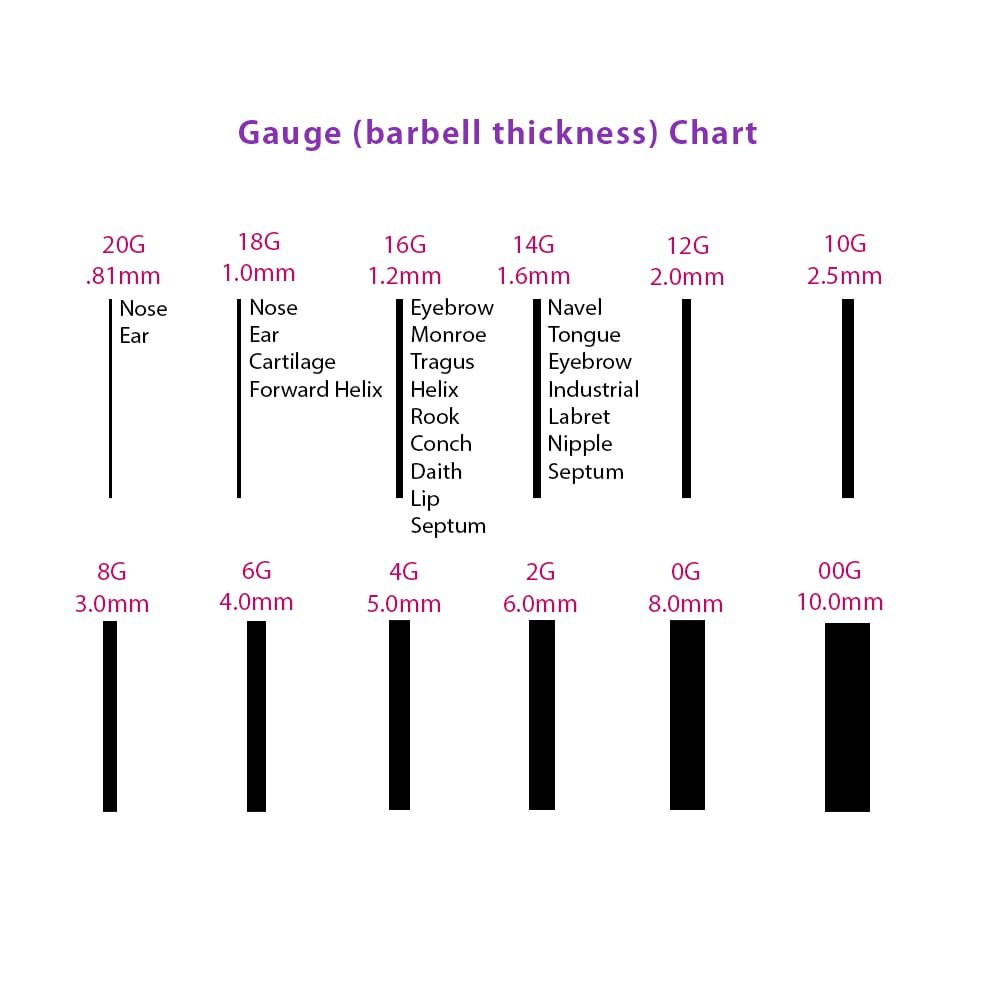
The standard earring gauge refers to the thickness of the wire used in ear piercings. It’s important to understand this measurement when choosing earrings to ensure a proper fit and comfort. Earring gauges typically range from 20 gauge (0.8mm) for standard earrings to larger gauges for hoops and statement pieces. Understanding the standard earring gauge will help you choose earrings that are not only stylish but also suited to your piercing needs.

What is the Standard Earring Gauge?
Welcome to our comprehensive guide on everything you need to know about earring gauges! If you are curious about what exactly a standard earring gauge is, how it is measured, and why it matters, you’ve come to the right place. In this article, we will delve into the fascinating world of earring sizes and gauges, helping you understand the terminology and make informed choices when it comes to selecting the perfect earrings for your style.
The Basics of Earring Gauges
When we talk about earring gauges, we are referring to the thickness of the earring wire or post that goes through your earlobe. The gauge measurement system is used to determine the size of the wire, with smaller numbers indicating a thicker wire and larger numbers representing a thinner wire.
Standard earring gauges typically range from 20 gauge (0.8mm) to 00 gauge (9.2mm) for most traditional earrings. Understanding these measurements can help you choose earrings that are comfortable and fit well with your piercings.
Measuring Earring Gauges
Measuring earring gauges is a straightforward process that requires a small tool called a caliper. This tool allows you to accurately measure the thickness of the earring wire or post. If you don’t have a caliper, you can also use a ruler with millimeter markings to estimate the gauge size.
Simply place the wire or post between the caliper arms or along the ruler and read the measurement in millimeters. This measurement will give you the gauge size of the earring, helping you identify the right size for your piercing.
Why Earring Gauge Matters
Choosing the right earring gauge is essential for several reasons. Firstly, selecting the correct gauge size ensures that the earrings fit comfortably and securely in your piercings. Wearing earrings with an incorrect gauge size can lead to discomfort, irritation, and even potential damage to your earlobes.
Additionally, understanding earring gauges is crucial when it comes to buying earrings online or from different vendors. Knowing your preferred gauge size allows you to make informed decisions and avoid purchasing earrings that may not be suitable for your piercings.
Common Earring Gauge Sizes
Here are some of the most common earring gauge sizes and their corresponding measurements:
20 Gauge (0.8mm)
A 20 gauge earring is a standard size for many traditional earrings. It is thin enough to fit comfortably in most ear piercings while still providing durability and support.
18 Gauge (1.0mm)
18 gauge earrings are slightly thicker than 20 gauge earrings and are commonly used for various earring styles, including hoops and studs. The increased thickness adds a bit of sturdiness to the earrings.
16 Gauge (1.2mm)
16 gauge earrings are considered medium thickness and are popular for statement earrings and dangles. The larger size allows for more intricate and detailed designs in the earrings.
14 Gauge (1.6mm)
14 gauge earrings are significantly thicker than the standard sizes and are often used for industrial piercings and other body jewelry. These gauges are sturdy and can accommodate heavier earrings.
Choosing the Right Earring Gauge
When selecting earrings, it’s essential to consider your comfort level, the style of the earrings, and the type of piercing you have. If you have sensitive earlobes, opting for a thinner gauge may be more comfortable. On the other hand, if you prefer larger, statement earrings, a thicker gauge can provide the necessary support.
It’s also important to consult with your piercer or a professional jeweler if you’re unsure about the right earring gauge for your piercings. They can provide guidance based on your specific needs and help you make an informed decision.
In conclusion, understanding the standard earring gauge is essential for anyone with ear piercings. By knowing the measurements, selecting the right earrings becomes a breeze, and you can ensure a comfortable and stylish look every time. Remember to measure your piercings accurately, consider your preferences, and choose earrings that not only look great but also feel great to wear!
We hope this guide has shed light on the world of earring gauges and provided you with valuable insights for your next earring purchase. Happy accessorizing!
How Ear Gauges Can Tear Your Ears 👂
Frequently Asked Questions
What factors determine the standard earring gauge size?
The standard earring gauge size is primarily determined by the thickness of the earring post. Common earring gauges range from 20 gauge (0.8mm) to 16 gauge (1.2mm), with 20 gauge being thinner and 16 gauge being thicker.
How can I determine the right earring gauge size for me?
Choosing the right earring gauge size depends on your personal preference and ear piercing hole size. Thicker gauges like 16 gauge are more durable and suitable for larger earrings, while thinner gauges like 20 gauge are delicate and ideal for smaller earrings.
Are there any standard earring gauge sizes for different types of earrings?
Yes, certain earring types often have specific standard gauge sizes. For instance, nose rings typically use 20 gauge, while industrial piercings usually require 14 gauge. It’s essential to consider the jewelry type when selecting the earring gauge size.
Final Thoughts
With a standard earring gauge typically ranging from 20 to 22, choosing the right size is crucial. Ensuring the proper fit can help prevent discomfort and potential damage to your earlobes. Always opt for high-quality materials such as surgical-grade stainless steel or titanium to avoid allergic reactions. Remember, knowing what the standard earring gauge is and selecting the appropriate size will not only enhance your style but also prioritize your comfort and ear health.